Home › Articles › Genetic code
The genetic code is universal: why is it the same for everyone?
Bacteria, plants and people read DNA with the same dictionary. How it was deciphered, and why it is so well built.
In brief
- The genetic code is the “dictionary” cells use to translate DNA into proteins.
- It uses three-letter words, the codons: 64 combinations for 20 amino acids and a stop signal.
- It is practically the same in all living things, with a few small variants.
- It is also surprisingly well built: it withstands errors better than almost all of the possible alternative codes.
A four-letter alphabet
DNA is written with four “letters,” the nucleobases A, C, G and T. Proteins, on the other hand, are chains made up of 20 different kinds of amino acids. So a translation rule is needed: a code.
Nature's solution is to read the letters in groups of three. With four letters you can form 4 × 4 × 4 = 64 different words, the codons. More than enough for 20 amino acids: in fact almost every amino acid has several synonymous codons, and three codons mean “end of sentence.”
How it was deciphered
In 1961 Marshall Nirenberg and Heinrich Matthaei put into a test tube an artificial RNA made only of U's (the equivalent of T in RNA) and observed that the system produced a protein made of a single amino acid, phenylalanine. It was the first word deciphered: UUU means phenylalanine.
Within a few years, thanks also to the work of Har Gobind Khorana and Robert Holley, the whole dictionary was completed. In 1968 Nirenberg, Khorana and Holley received the Nobel Prize.
The same for everyone
The most surprising discovery was that this dictionary did not belong to any particular organism. Bacteria, yeasts, plants, mice, human beings: all of them read DNA by the same rules.
This has enormous practical consequences. Since the late 1970s it has been possible to insert human genes into a bacterium and have it produce human proteins: insulin for people with diabetes, for example, has been made this way for decades. It works because the bacterium “reads” the human gene exactly as our own cells would.
There are small variants. In mitochondria, the power plants of our cells, some codons have a different meaning; the same is true in certain microorganisms. But these are secondary modifications of a single basic code, not independent codes.
A “frozen accident”?
Why this particular code? In 1968 Francis Crick, one of the discoverers of the double helix, proposed that it was a “frozen accident”: a random choice made at the beginning of life that then became impossible to change, because changing the meaning of one word would have disrupted all of the organism's proteins.
Later studies have shown, however, that the code does not look random at all. It is organized so that the most common errors, such as the substitution of one letter, tend to produce an amino acid similar to the right one, limiting the damage. A 1998 analysis concluded that, in this respect, only about one in a million of the possible alternative codes would do better than the natural one.
Where science stops
The universality of the code is the strongest evidence that all living things descend from a single ancestor, LUCA. But it leaves two questions open. How did the code arise, given that the machinery that reads it is made of proteins built by following the code itself? And how did it become so optimized before LUCA, in a relatively short time?
There are hypotheses: direct chemical links between certain amino acids and certain sequences, a gradual expansion from a few amino acids to twenty, selection among competing codes. None of them, for now, tells the whole story.
From here on we are no longer talking about what science has established, but about a hypothesis: the one proposed in the book Lux Lucis. It should be read as such.
What if the code came from elsewhere?
Lux Lucis turns the question around. Instead of asking how such an efficient code emerged from chaos, it asks: what if the pattern was not invented by matter, but “listened to”?
The book's central hypothesis is that light carries not only energy but also a form of information, and that organic matter, having reached a certain complexity, can come into resonance with it and organize itself. Chapter 6, “The recipe for life,” describes this process as a recipe with three ingredients: rich chemical ground, the energy of a stable star and molecular structures able to act as an antenna.
From this perspective, the universality and the efficiency of the code would not be two coincidences to be explained separately. The code would be the same for everyone because we all descend from the same first “tuning in,” and it would be so well made because it reflects an order that already existed.
What remains open
The book does not say what, physically, the pattern contained in light would be, nor how a molecule could read it, and it says so openly. It is a hypothesis to explore, not a demonstrated mechanism. But it touches on something real: the genetic code is one of the most elegant objects in nature, and science has not yet fully explained where its elegance comes from.
Go deeper in the book
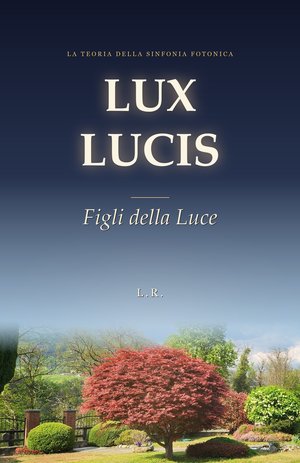
This topic is developed in chapter 6 of Lux Lucis – Children of the Light.
Read the first chapter for free · English edition in preparation; available now in Italian and Spanish
Read next
-
LUCA, the last common ancestor of all living things
All living things descend from a single ancestor that lived about 4.2 billion years ago. How we know, and what we still don't know.
-
How did life begin on Earth? What we know and what we still don't
From the Miller experiment to the RNA world: science's hypotheses, their limits, and a different way of asking the question.
-
Photosynthesis: does a plant “read” light?
For a plant, light is not only energy: it is information about where to grow, who is nearby and what season it is.