Home › Articles › Photosynthesis
Photosynthesis: does a plant “read” light?
For a plant, light is not only energy: it is information about where to grow, who is nearby and what season it is.
In brief
- Through photosynthesis, plants turn light into chemical energy, producing sugars and oxygen.
- But for a plant, light is not only energy: it is also information. Plants “read” the direction, color and duration of light.
- They do so with specialized molecules, the photoreceptors, which are distinct from chlorophyll.
- Some studies have suggested quantum effects in the way light energy is harvested; their actual role is still debated.
Photosynthesis in two lines
A leaf takes carbon dioxide from the air and water from the soil and, with the energy of light, turns them into sugars, releasing oxygen. Almost all life on Earth depends on this process: it is the source of the food we eat and the oxygen we breathe.
The work begins with chlorophyll, the pigment that absorbs mainly red and blue light. Green light is largely reflected: that is why leaves look green to us.
Plants read light
The less familiar part is a different one. Besides using light as fuel, plants use it as a source of information about the world, thanks to molecules called photoreceptors.
- Where the light is. Phototropins, photoreceptors sensitive to blue light, let the plant work out which side the light is coming from and grow toward it. It is what you see when a plant on the windowsill bends toward the window.
- Who is nearby. Phytochromes measure the ratio of red light to “far-red” light. Leaves absorb red and let far-red through: if too much of it arrives, it means other plants are casting shade, and the plant responds by stretching upward to overtop them.
- What season it is. Many plants measure the length of the nights to decide when to flower. This is photoperiodism: some flower when the days grow longer, others when they grow shorter.
- What time it is. Cryptochromes, sensitive to blue light, help synchronize the plant's internal clock with the daily cycle.
In other words, for a plant light is not only energy: it is a message about the environment, and the plant deciphers it and uses it to decide how to grow.
A pinch of quantum physics
In 2007 a group of researchers observed, in a light-harvesting protein found in some photosynthetic bacteria, signals that seemed to indicate that the energy was exploring several paths at once, in a quantum fashion, before reaching the reaction center. The news made a great stir: life, it seemed, was exploiting quantum physics.
Later studies have tempered the enthusiasm: these effects seem to last too briefly to play an important role, and the debate is open. The fact remains that the first step of photosynthesis, the transfer of energy from light to the reaction center, is extraordinarily efficient: almost every photon absorbed is put to use.
Where science stops
There is nothing mysterious about photoreceptors: they are molecules that change shape when they absorb a certain color of light, and set off a chain of signals in the cell. Science knows them well.
What science does not say, and has no reason to say, is whether light might contain a deeper kind of information than information about the environment, something that life has “listened to” from the very beginning. It is a question that goes beyond what can be measured today.
From here on we are no longer talking about what science has established, but about a hypothesis: the one proposed in the book Lux Lucis. It should be read as such.
The illuminated leaf
The whole of Lux Lucis grew out of a leaf. Chapter 2 describes a summer afternoon in the garden, in front of a leaf with the sun shining through it, and a simple thought: we know that light, in optical fibers, carries information. What if light carried information in nature too, and life were matter that learns to listen to it?
Chapter 5, “The cosmic messenger,” develops the idea. The light of a star would not be just a rain of energy, but a “symphony” of photons that might contain a pattern. Organic matter, having reached a certain complexity, might come into resonance with it like a tuning fork that vibrates when it hears its own note. This is where the theory gets its name: the Photonic Symphony.
In this view, the fact that plants read light is not a curiosity: it is an echo of what, according to the book, happened at the origin of life, when matter first began to “listen” to the light.
What remains open
It should be said plainly: that plants draw information from light is a scientific fact; that light contains a pattern capable of organizing life is a hypothesis of the book, and the book itself admits that it does not know what this pattern would be or how it would be read.
But the next time you see a plant bending toward the window, it is worth remembering that it is not only seeking energy. It is reading the world. To explore how life might have switched on, you can read How did life begin on Earth?
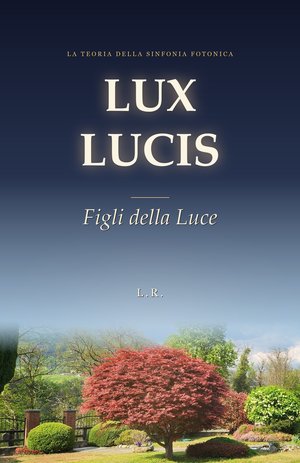
Go deeper in the book
This topic is developed in chapters 2 and 5 of Lux Lucis – Children of the Light.
Read the first chapter for free · English edition in preparation; available now in Italian and Spanish
Read next
-
Are we really made of stardust?
The carbon, oxygen and iron in our bodies were born in stars. How much of it is true, and what doesn't quite add up in the famous phrase.
-
Do trees talk to each other? The Wood Wide Web
Fungi linking roots and chemical signals in the air: what is solid, what is overstated, and the forest as an image of a network.
-
How did life begin on Earth? What we know and what we still don't
From the Miller experiment to the RNA world: science's hypotheses, their limits, and a different way of asking the question.