LUCA, the last common ancestor of all living things
All living things descend from a single ancestor that lived about 4.2 billion years ago. How we know, and what we still don't know.
In brief
- LUCA (Last Universal Common Ancestor) is the last common ancestor of all living things on Earth today: bacteria, archaea, plants, fungi, animals, us.
- It was not the first living thing, but the last one from which we all descend.
- A study published in 2024 places it at about 4.2 billion years ago: it was already a complex cell, with hundreds of genes.
- The evidence for its existence is the fact that all living things use the same genetic code and the same basic molecules.
A tree with a single root
When Darwin published On the Origin of Species in 1859, the book contained a single illustration: a branching tree. The idea was that species had not been created separately but descended from one another, like branches from a trunk. Darwin went so far as to suggest that all living things might derive “from some one primordial form.”
At the time it was an intuition. Today it is one of the most solid results in biology. That primordial form has a name: LUCA, the Last Universal Common Ancestor.
How we know it existed
No one has ever found a fossil of LUCA, and probably no one ever will: it was a microorganism that lived billions of years ago. The evidence is inside us, and inside every other living thing.
- The same genetic code. A snail, an oak and a bacterium translate DNA into proteins using almost exactly the same dictionary: the same 64 three-letter “codons” for the same amino acids. We cover this in a dedicated article.
- The same molecules. All of them use DNA and RNA, the same 20 basic amino acids, and ATP as their energy currency.
- The same “handedness.” Many biological molecules exist in two mirror-image versions, like a right hand and a left hand. All life uses “left-handed” amino acids and “right-handed” sugars. In the laboratory, both versions form in equal amounts.
- Shared genes. Some genes, such as those of the ribosome, are present in all organisms, with differences that can be used to reconstruct the tree of life.
It would be extremely unlikely for all these choices, many of them arbitrary, to have been repeated identically in independent lines of life. The simplest explanation is that we all inherited them from the same ancestor.
What it looked like
By comparing the genes found in all the major groups of living things, it is possible to work out which ones must already have been present in LUCA. In 2016 a study led by William Martin identified about 355 protein families going back to it, and inferred a heat-loving organism that lived without oxygen and drew its energy from hydrogen: a profile consistent with the hydrothermal vents of the ocean floor.
In 2024 an international team, using broader methods, estimated that LUCA had about 2,600 proteins and a genome of a few million letters, comparable to that of a present-day bacterium. The same study places it at about 4.2 billion years ago, just a few hundred million years after the Earth formed. According to the authors, LUCA even had a rudimentary defense system against viruses, and was already living within an ecosystem of other microorganisms.
In other words, LUCA was not a rough sketch of life. It was already a sophisticated organism.
Why “last” and not “first”
The name says “last” for a precise reason. LUCA is the point where the lines leading to all of today's living things come together, but before it there was already a history: simpler forms, chemical experiments, perhaps other populations of cells that died out without leaving descendants.
The story is further complicated by the fact that microorganisms exchange genes directly, not only from parent to offspring. This “horizontal transfer” makes the base of the tree look more like a web. But the overall picture holds: there was a common ancestor, and everything alive today bears its mark.
Where science stops
We know that LUCA existed, and we are beginning to understand what it was like. Two big questions remain open.
The first: how did things get, in so little time, from the chemistry of the early Earth to an organism with thousands of proteins? That is the question of the origin of life, and it does not yet have an answer.
The second: why only one origin? The early Earth had oceans, volcanoes, ponds, warm seabeds, all of them potentially suitable environments. If life begins whenever the conditions are right, we would expect several independent beginnings. Instead we see a single family. We discuss this in Why did life arise only once?
From here on we are no longer talking about what science has established, but about a hypothesis: the one proposed in the book Lux Lucis. It should be read as such.
LUCA as the first “tuning in”
Lux Lucis proposes looking at LUCA in a different way. If life is not a chemical accident but the “switching on” of matter that, having reached a certain complexity, comes into resonance with the information carried by light, then LUCA is not a lucky lottery winner: it is the first system that tuned in stably.
From that moment, according to the book, something decisive happens. The first system able to copy itself consumes the organic molecules built up over millions of years and occupies every niche. The “window” in which life could switch on from scratch closes. That is why, in this reading, the single origin is not chance but necessity.
The fact that LUCA appears so early and already so complex is, for the book, consistent with this idea: not a very long wait for lucky combinations, but a process that, once the conditions are ready, moves quickly.
What remains open
The book's hypothesis does not explain how this “tuning in” would actually take place, and it says so. Science, for its part, has explanations of its own for the uniqueness of LUCA, starting with competition among the earliest forms of life. The two readings do not entirely exclude each other: the book adds a why, while science keeps looking for the how.
What remains, in any case, is a fact worth pausing over: every living thing you meet is a very distant relative of yours.
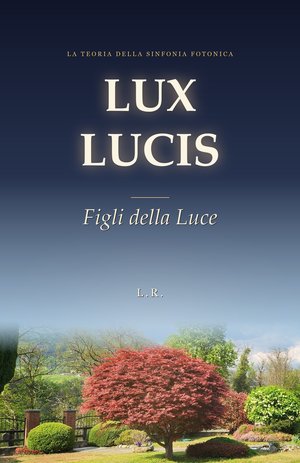
Go deeper in the book
This topic is developed in chapters 1 and 7 of Lux Lucis – Children of the Light.
Read the first chapter for free · English edition in preparation; available now in Italian and Spanish
Read next
-
Why did life arise only once?
On a planet full of suitable environments, a single family of living things. Science's explanations and the idea of the “closing window.”
-
The genetic code is universal: why is it the same for everyone?
Bacteria, plants and people read DNA with the same dictionary. How it was deciphered, and why it is so well built.
-
How did life begin on Earth? What we know and what we still don't
From the Miller experiment to the RNA world: science's hypotheses, their limits, and a different way of asking the question.